About Course
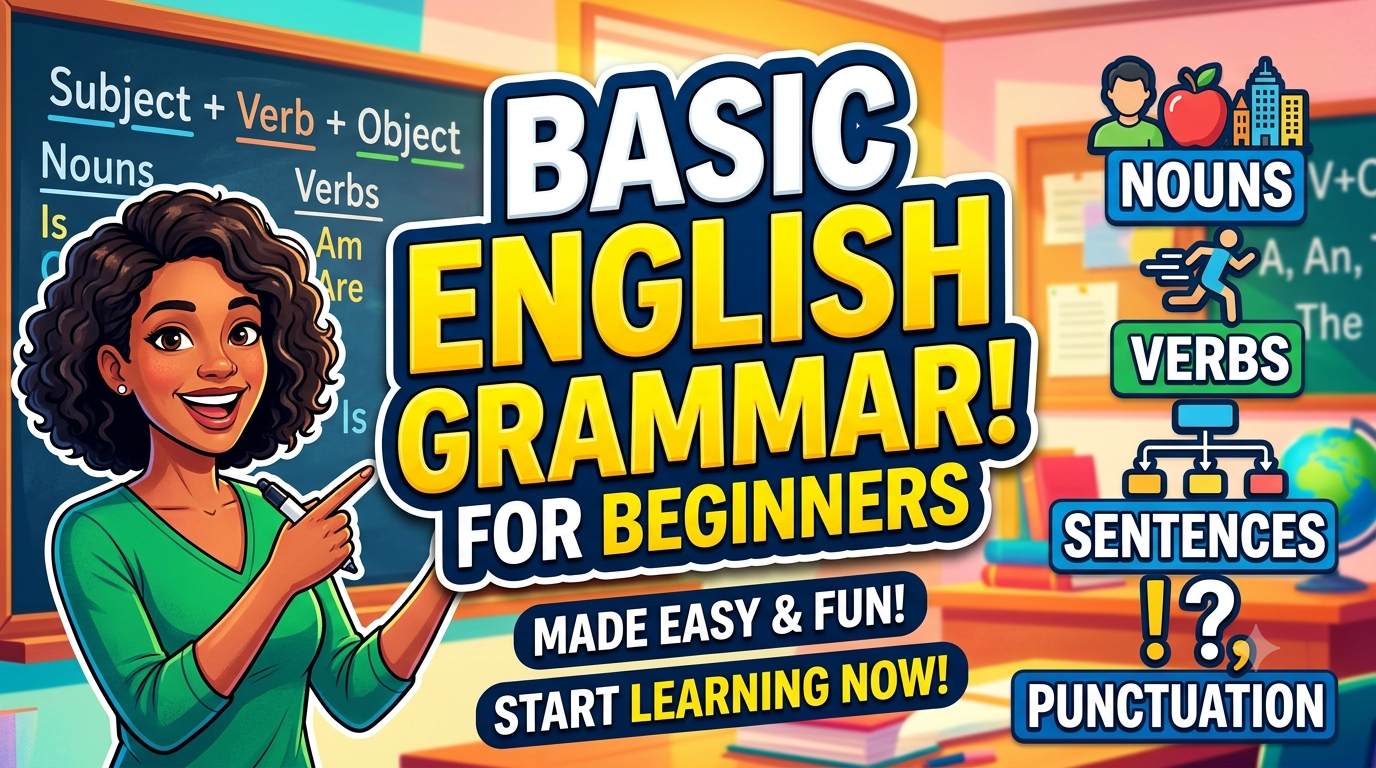
Mastering basic grammar is the foundation of clear communication for non-native English speakers. While vocabulary gives you words, grammar provides the structure to turn those words into meaningful, accurate ideas.
Here are the key reasons why basic grammar is essential:
-
Enhances Clarity and Avoids Misunderstandings: Proper grammar ensures your message is delivered clearly without ambiguity. Correct word order, verb tenses, and punctuation prevent listeners or readers from misinterpreting your intended meaning.
-
Builds Professional and Academic Credibility: Whether writing emails, resumes, or academic essays, grammatically correct language creates a strong first impression. It demonstrates attention to detail, competence, and respect for your audience in professional settings.
-
Boosts Conversational Confidence: Understanding fundamental grammar rules reduces self-doubt when speaking. Non-native speakers who grasp basic structures can express themselves more fluidly without constantly hesitating or worrying about making simple mistakes.
-
Improves Listening and Reading Comprehension: Grammar works both ways. Knowing basic sentence structures helps you break down and understand complex spoken sentences, books, news articles, and workplace reports much faster.
-
Accelerates Advanced Language Learning: Basic grammar acts as the building blocks for language fluency. Once you master core concepts like subject-verb agreement and basic tenses, learning complex grammar patterns and idioms becomes significantly easier.
-
Facilitates Effective Written Communication: Writing requires higher precision than speaking because you cannot rely on tone or body language. Strong basic grammar guarantees that written messages are coherent, concise, and easy to follow.
Focusing on basic grammar isn’t about achieving perfection—it is about empowering non-native speakers to connect, collaborate, and succeed in a globalized world.
Would you like tailored advice or practice exercises targeting a specific grammar area, such as verb tenses or sentence structure?
Course Content
Noun Numbers
-
Noun number
00:00 -
Noun quiz
-
Noun gender
00:00
Student Ratings & Reviews